


Triple Match 3D
4.412.13K Reviews
App Specs
- Version
- 197.01
- Updated On
- License
- Free
- Downloads
- 10,000,000+
- Developer
- Boombox Games LTD
- Categories
- Puzzle
- Platform
- Android, iOS
Screenshots
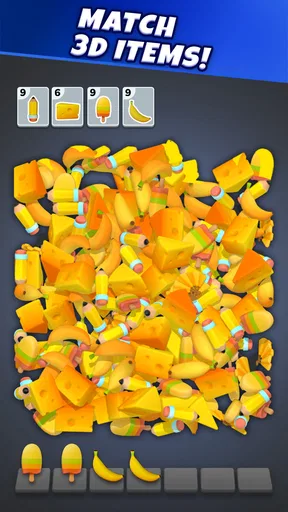
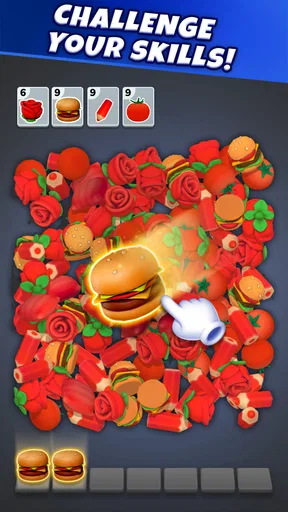
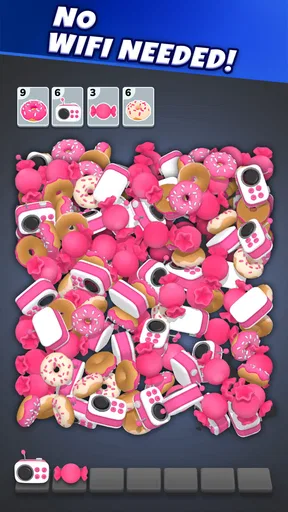
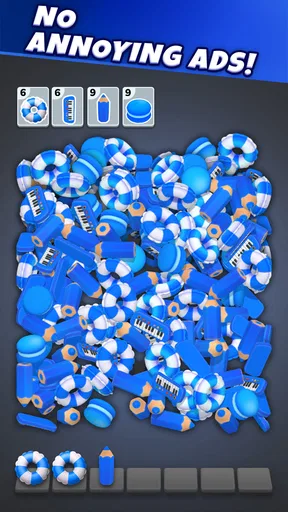
 Analysis by AppCompare
Hey there! So, I recently had the chance to dive into this super fun game called Triple Match 3D, and let me tell you, it's quite the addictive little gem. If you're into puzzle games that keep your brain engaged while also offering a bit of eye candy, this might just be your new go-to. Let me walk you through my experience with it.
Who this sort of puzzle suits
I’d point this game toward people who enjoy visual searching as much as making matches. The key pleasure is scanning a crowded heap, identifying useful objects, and deciding which three to collect before the board changes. That makes it a good fit for a short break when you want something more engaging than a passive distraction but less demanding than a story-heavy game.
It is less suited to anyone who wants a slow, uninterrupted puzzle with no time pressure. The changing objectives and occasional clock-focused stages can make a session feel brisk, and a crowded screen can be tiring if you are already low on patience. I’d choose a calmer, turn-based puzzle instead if I wanted to think at my own pace without worrying about a level’s conditions.
What the 3D pile asks you to notice
The spatial layout is more than a cosmetic change from a flat matching board. Objects can obscure other objects, so a tempting match on the surface may not be the best move if it blocks access to pieces you need. I found it useful to pause for a moment before tapping and check whether a visible trio is actually helping clear the pile or merely using up space in the selection area.
A practical habit is to rotate the heap before committing to a choice. A quick look from another angle can reveal an item that was hidden behind a foreground object, and that can change which match is safest to make. This is especially useful when several similar shapes are close together: scanning first reduces accidental taps and helps me form a clearer plan.
I also treat the selection area as a limited resource rather than a place to collect anything that looks useful. If I start gathering unrelated objects while searching for a third match, I can leave myself less room to recover. When the board is busy, I focus on completing one trio at a time and avoid taking a pair unless I have a reasonable idea where the final matching object is.
How I would fit it into a day
For me, the strongest everyday use is a brief waiting period: sitting in a lobby, taking a break between chores, or winding down after finishing a small task. One level gives that pause a clear beginning and end, while the object hunt gives my attention something concrete to do. I would not start a timed stage just before I need to leave, though; a level that begins as a quick distraction can demand more focus than expected.
Worth Reading Before You Choose

EA SPORTS FC Mobile 26 Is a Bigger Football Game, but It Takes Time

Flipboard Shows What News Apps Must Do Beyond the Feed

Switching to Android Auto Means Rethinking Your Driving Routine

Google Calendar Makes a Crowded Week Easier to Manage

Ludo King Makes the Most of the Minutes Between Plans

Baby Panda World Brings Quick Play to Modern Phones, but Its Game Library Feels Busy
If I were playing during a commute or in another stop-and-start situation, I’d choose moments when I could look at the screen continuously. This is a visual puzzle, so frequently glancing away makes it harder to remember what is exposed and which objects I have already selected. It works better as a focused little session than as something to operate while multitasking.
That distinction also helps answer whether it is a suitable game for children or a family device. Its age rating is Everyone, and the basic idea is easy to explain, but the pace and need to track objects may suit some players better than others. I’d let a younger player try a level together with an adult first, then see whether the speed feels enjoyable rather than stressful.
Where it sits among puzzle games
Compared with familiar match-three games built around a fixed grid, this one asks me to search through objects in depth instead of planning a chain of swaps across rows and columns. That makes visual attention and spatial awareness more important than setting up a long sequence of board moves. If I want a quick scan-and-decide challenge, the piled-up format is appealing; if I want deliberate combo planning, a conventional grid puzzle may be the better choice.
It also differs from hidden-object games that ask you to find a list of items in a detailed scene. Here, finding an object is only half the task: I have to collect matching pieces in threes and manage what I have already selected. The result feels more active than simply scanning a picture, but it can also become visually busy when the pile is dense.
The travel theme gives the mini-games a change of setting, though I would choose the game for its matching loop rather than expect a travel story or destination guide. The theme is a pleasant frame for the activity, not the main reason I would keep playing. That is a useful distinction if you are comparing it with narrative games or travel apps.
What's the Game All About?
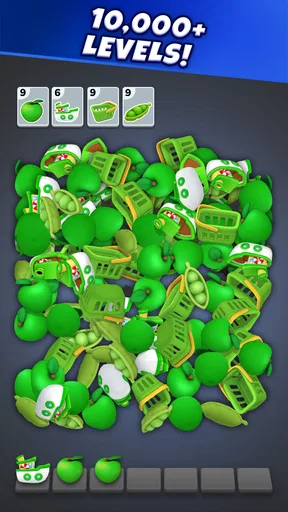
At its core, Triple Match 3D is a match-3 game with a vibrant twist. Unlike your typical flat-grid match-3 games, this one takes the experience into the third dimension. You’re presented with a pile of 3D objects, and your job is to match three of the same kind to clear them from the clutter. It’s like Marie Kondo for your phone!
The game kicks off with some easy-peasy levels to get you warmed up, but trust me, it doesn’t take long before the challenge ramps up. You’ll find yourself rearranging and rotating objects, trying to spot that elusive third match hidden under layers of randomness. It’s engaging, and honestly, a bit addicting—just the way we like our games, right?
Graphics and Design
One of the first things that struck me was the vibrant and colorful graphics. The 3D objects are well-rendered, making the whole matching experience feel fresh and exciting. The developers have done a great job in ensuring each object looks distinct yet fits seamlessly into the game’s overall aesthetic. It’s visually appealing without being overwhelming, which is a tricky balance to strike in mobile games.
The interface is clean and intuitive. You won’t find yourself fumbling around trying to figure out what to do next, which is a huge plus. It’s all about focusing on the game rather than navigating endless menus.
Gameplay and Mechanics
The real hook here is the gameplay itself. As you match objects, you progress through levels that gradually introduce new challenges and obstacles. Sometimes you’ll need to clear all objects within a certain timeframe, while other times you’ll be racing against the clock to prevent the pile from overflowing. It’s this variety that keeps the game feeling fresh and keeps you on your toes.
Controls are smooth and responsive. You can rotate the pile to get a better view of your options, which adds a strategic element to the game. It’s not just about speed; it’s about thinking ahead and planning your next move. I found myself getting totally absorbed, often playing "just one more level" longer than I intended!
What spending does—and doesn’t tell me
The game is free to start, which makes trying its central puzzle loop a low-commitment decision. It is made by Boombox Games LTD, has an average rating of 4.5 from around 87,000 ratings, and has passed 10 million installs. Those figures suggest that many players have given it a try, but popularity alone does not tell me whether its pace or purchase options will suit you.
There are in-app purchases, with listed items ranging from $0.49 to $204.99. That is a wide spread, so I’d look carefully at the amount and purpose of any purchase shown in the game rather than assume every option is a small convenience. The existence of purchases does not, by itself, tell me that progress requires spending, and I would not treat a tempting offer as a reason to buy while frustrated by a difficult level.
My practical rule is to decide before playing whether I am comfortable spending anything at all. If the answer is no, I would approach the game as a free puzzle and accept that a challenging stage may take another attempt or a break. If I were considering a purchase, I’d first check the exact item and price on its confirmation screen, then ask whether it solves a recurring problem or just offers relief from one moment of impatience.
That distinction matters in a game built around short levels. A purchase can feel especially appealing when I am close to finishing a stage, but being nearly done is not the same as needing help. I’d rather step away, return with a fresh view of the pile, and see whether a different order of matches works before paying for anything.
Progress, pressure, and a fair challenge
The difficulty curve is part of the appeal, but it also sets the terms of a session. Early stages let me understand the basic visual language; later ones ask for more deliberate scanning and faster choices. When a level has a timer or a pile that can overflow, I find it more useful to make a few confident matches than to tap quickly at every possible trio. Speed without a plan can make the available choices harder to manage.
For a fair test of skill, I try to separate mistakes I can control from difficulty that simply feels unfamiliar. Missing an exposed object because I did not rotate the pile is something I can correct next time. Reaching a point where I cannot see a useful match is a cue to slow down, inspect another angle, and avoid filling the selection space with hopeful guesses. That approach makes a loss feel more informative rather than merely annoying.
I would not call the game competitive in the sense of needing to prove anything to another player. Its challenge, as I experience it, is primarily against the arrangement and the level conditions. That makes it appealing if I want a personal puzzle, but less compelling if I am looking for head-to-head matches, a team goal, or a social reason to return.
One helpful way to manage pressure is to treat a difficult stage as a focused attempt, not a test of reflexes. I look for the most exposed triples first, then reassess the pile after each clear. When the board gets cluttered, a deliberate rotation can be worth more than a fast tap. The trade-off is that careful play takes attention, so this is not always the right choice when I only have a few distracted seconds.
What to expect before installing
Triple Match is a free puzzle game rated Everyone, and it was released on April 13, 2022. The current version is 182.04 and it requires Android 7.0 or later. I’d still check that my device’s operating system meets that minimum before trying to install it; the game’s listed price does not remove that compatibility requirement.
Those details help answer the basic download questions, while the more personal question is whether the presentation works for you. A colorful heap of small objects relies on being able to distinguish shapes quickly. If dense visuals or repeated scanning tend to bother you, I’d try a short session before deciding it belongs in your regular rotation. The game’s Everyone age rating is useful context, but it does not mean every player will enjoy the pace equally.
The version number also gives a point of reference if you are comparing what is installed on your device, but I would not infer particular changes from that number alone. What matters during a first session is whether the controls feel comfortable, whether you can read the objects clearly, and whether the level pressure feels motivating rather than tiring.
Why You Might Love It
If you’re a fan of puzzle games, Triple Match 3D is a no-brainer. It’s got the perfect mix of challenge and fun, with each level feeling like a mini victory. Plus, the game is easy to pick up and play, making it perfect for those quick breaks throughout the day.
The game also encourages strategic thinking and problem-solving, which I personally find super satisfying. It’s not just about mindlessly matching objects; there’s a genuine sense of accomplishment when you clear a particularly tricky level.
Potential Drawbacks
While the game is generally awesome, it’s worth noting that some levels can be quite challenging. If you’re someone who prefers a more laid-back gaming experience, you might find yourself a bit frustrated at times. But hey, that’s part of the fun, right?
There are in-app purchases available, which is pretty standard for mobile games these days. While you can play without spending a dime, some might find the temptation to buy power-ups a bit too enticing when they’re stuck on a tough level.
A measured trust verdict
From a fairness perspective, I can judge the stated purchase range and the kind of challenge the game presents, but I would not claim that spending is necessary or that every purchase changes progress in a particular way. I’d make that decision based on what is actually offered in the game at the moment I consider buying. That is the sensible approach whenever a free-to-start puzzle puts optional spending beside a tough stage.
The game’s popularity and rating are useful signals that it has reached a large audience, not proof that every part of the experience will be right for me. I’d trust my own first few sessions more: can I see the objects comfortably, do I enjoy searching from different angles, and can I stop when I planned to? If those answers are yes, its quick matching loop has a lot to offer without needing a grand promise.
Final Thoughts
All in all, Triple Match 3D has quickly become one of my favorite time-killers. It’s engaging, challenging, and just the right amount of addictive. Whether you’re a hardcore puzzle fan or just someone looking for a fun way to pass the time, I’d definitely recommend giving it a shot.
So, if you're ready to put your matching skills to the test, why not give it a whirl? Happy gaming!
Pros
- Engaging 3D graphics enhance gameplay.
- Smooth controls for easy navigation.
- Offers daily challenges for rewards.
- Variety of levels keeps it interesting.
- Offline mode available for convenience.
Cons
- In-app purchases can be pricey.
- Ads may interrupt gameplay frequently.
- Requires significant storage space.
- Limited free content after initial levels.
- Battery consumption is relatively high.
FAQs for Triple Match 3D
What is the main objective of Triple Match 3D?
Triple Match 3D is a puzzle game where players aim to match three identical 3D objects from a cluttered pile. The goal is to clear all objects within a set timeframe to advance to the next level. It challenges players' observation skills and quick decision-making, making it both engaging and rewarding.
Are there in-app purchases available in Triple Match 3D?
Yes, Triple Match 3D offers in-app purchases that allow players to buy extra lives, power-ups, or remove ads. These purchases can enhance the gaming experience, though they are not necessary to enjoy the game fully. Players can progress through levels without spending money, but in-app purchases can provide strategic advantages.
Is Triple Match 3D suitable for children?
Triple Match 3D is suitable for players of all ages, including children. The game features simple mechanics and colorful graphics, making it appealing to a younger audience. However, parents should be aware of in-app purchases and supervise to ensure that children do not make unintended purchases.
Does Triple Match 3D require an internet connection to play?
Triple Match 3D can be played offline, allowing users to enjoy the game without an internet connection. However, certain features, like leaderboards and in-app purchases, will require a connection. Playing offline is a great option for users looking to enjoy the game on the go without using mobile data.
How does Triple Match 3D handle user data and privacy?
Triple Match 3D complies with standard privacy protocols and collects minimal user data necessary for gameplay and updates. Users are encouraged to read the privacy policy before downloading to understand how their data is used. The game may collect data for analytics and improving user experience, but sensitive information is generally not required.


